Retrospective Analysis/Review: Between the Buried and Me, "Colors": 10 Years Later
9/18/2017
0 Comments
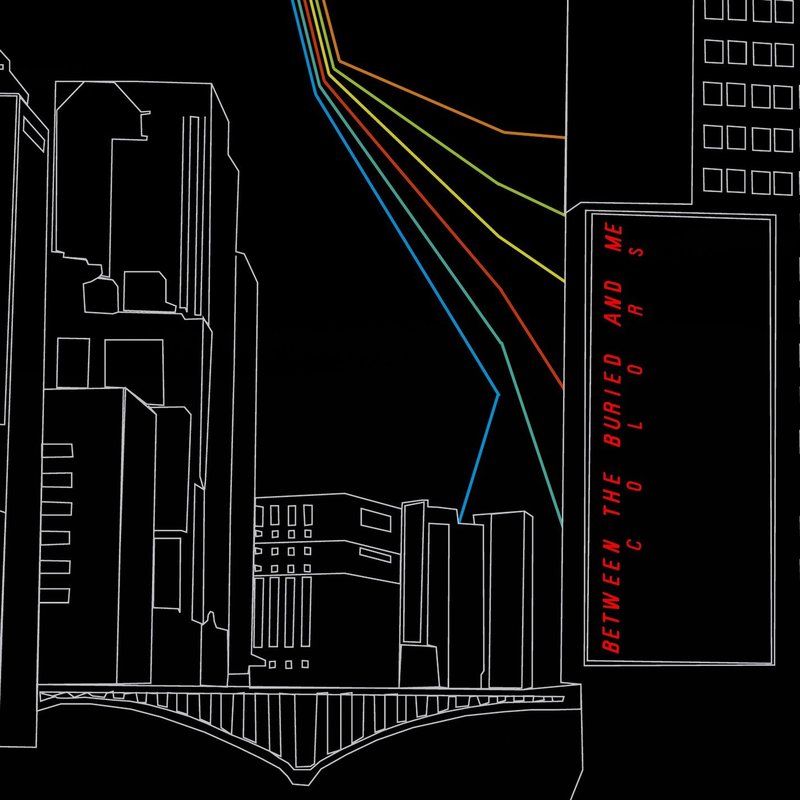
Ten years ago, Between the Buried and Me was thought to be just a metalcore band that occasionally used progressive elements you would find in groups like Opeth and Dream Theater. Formed in 2000 after Tommy Rogers and Paul Waggoner left deathcore act Prayer for Cleansing, Between the Buried and Me started off as pretty much just a very heavy metalcore project. Sure, they were working in some different elements, including some clean vocals and some progressive passages, but what the band would turn into come 2007 was nothing more than a dream when the group released their self-titled debut in 2002 and The Silent Circus in 2003. 2005’s Alaska, which introduced Glass Casket members Dustin Waring and Blake Richardson, as well as bassist Dan Briggs, showed the band becoming much more proggier with tracks such as “Selkies: The Endless Obsession” and “Backwards Marathon,” but they were still very much a metalcore band. Then, two years later, the group would come together to take on a task they had never done before: composing a continuous, 64-minute concept piece. They’d enter Basement Studios in their home state of North Carolina in May 2007 with producer Jamie King, and roughly four months later, release Colors, a name ever so fitting for this piece of art that would go down as one of the proudest moments in both metalcore and progressive metal history. Ten years later, the impact it has had on the metal community is still readily apparent.
Colors opens up with the two-part “Foam Born.” Part one, “The Backtrack,” offers up a glimpse of the dystopian world Between the Buried and Me has created where our protagonist, waiting in the cold for supplements, is introduced in vocalist/keyboardist Tommy Rogers’s unsettling, piano-led performance. With a drum roll from Blake Richardson, the metal kicks in, and we learn that “The drive to complete ourselves has become a blurry vision,” and enter a discussion on the greed and selfishness that has been engulfed the community. Part two, “Decade of Statues,” picks up immediately to introduce the protagonist’s disgust for society, with a breakdown underlining its obsession with power as Rogers begs “Rip out my fucking eyes, I can’t watch you grow into this.” This part is metalcore at it’s finest, brimming with technical riffs and breakdowns. Unlike on previous releases from the group, however, there is obvious growth in the band’s progressive metal, which has only made them stronger in the long-run. Tommy has only gotten better as a vocalist and keyboardist, and the dynamic between Paul Waggoner and Dustie Waring’s guitar playing is more intuitive than ever before. The rhythmic section of Dan Briggs and Blake Richardson feels much more natural here than it does on Alaska. It’s very apparent that the members who joined the group for the previous LP are much more comfortable with the direction from the moment “Foam Born” begins. Hell, even Jamie King’s production fits the style on Colors better than any previous works.
With a single strike of the drum, this track leads into the menacing introduction of “Informal Gluttony,” which introduces the sound of a gong. Though quite different from the preceding section of this LP, the transition from metalcore to extreme metal works thanks to Blake’s dextrous drumwork. The bass work on this track by Dan Briggs is especially impeccable on this track, and I think it’s his best performance on the whole composition. Tommy Rogers also shows more of his vocal talent on here, doing both cleans and harsh vocals on the track, but the first thing we hear is chanting. Then, a bass lick from Dan Briggs. Next, we get some guitar, and the guitar follows. The track really takes off when Rogers enters the mix. This is certainly the most “metal” section of Colors, introducing tremolo picking and blast beats, but lyrically deals with the building of this society. We can presume our protagonist is a construction worker. As they work, they are subjected to propaganda: this is the chorus of “feed me fear,” supplemented by Tommy Rogers’ intonation of the title. The protagonist also talks about how “the little kids” don’t listen anymore, leading us to speculate they have been brainwashed by this strange society that seems hellbent on one thing: building. They chant “rebuild” fifteen times at the beginning of the song, after all. The protagonist also demonstrate how you cannot just “close your eyes” to what is happening because it is all around you, shoved down your throat at every turn; and people have grown so numb to it that they simply accept what they are told.
Once again, Blake Richardson transitions us into the next piece, “Sun of Nothing.” While the previous tracks stuck to a particular sound, this one changes pretty consistently throughout its 11-minute timespan. It’s relatively metal before taking on some jazz-fusion influences after a brief acoustic break, featuring a quick, sassy piano line, and then goes 70s prog a la King Crimson and Pink Floyd as the track draws to a close. I believe Tommy’s synth-playing stands out most, especially during the brief piano section in the middle and during the full-on prog break toward the end. Paul and Dustie’s dueling guitars are as tight as ever, smoothly transitioning from super metal to super proggy, and Dan Briggs’ bass playing brings the jazz The track’s lyrics deal with the isolation and loneliness of a brainwashed world, the protagonist noting how everyone lives in complete ignorance of the evils that surround their society. They disregard all warnings as the ravings of outsiders, and the more our protagonist tries to speak against these evils, the more detached they become from the society. Towards the end, they begin questioning why they fight at all. As they drift off to sleep, the full band transitions us into “Ants of the Sky.”
“Ants of the Sky” is the protagonist’s dream. This song sounds absolutely triumphant, with plenty of shredding melodic guitars throughout its 13-minute timespan and other super metal moments, offset by beautiful moments of ambience. The rhythm section is monstrous, with Blake and Dan giving their all, but man do Paul and Dustie really show off. The synth keeps it jazzy, carrying over its tone from the previous section, and the lyrics, including such gems as “The view used to be better, lands growing into one / We wanted it this way” and “A bird’s eye view into what I’ve always imagined life could be” creative an immersive, dreamlike experience. Of course, it’s the country section that gets people talking. Yes, Between the Buried and Me went briefly country on Colors, and it is fucking glorious. This is alluded to earlier in the track by the use of a cowbell, but I don’t think anyone was expecting to hear a banjo, a fiddle, and the sounds of a party or a crowded bar spliced in before a return to the triumphant melody from earlier. I love how oddly wonderful this segment is and interpret it as an important part of the story, where our protagonist goes out among the people and sees them for the complacent sheep they are, referenced by the continuous screaming of “the walking dead,” too blinded by simple entertainment to comprehend the problems with their world.
“Prequel to the Sequel” deals with the protagonist’s true stand against the tyrannical powers at work, posing as an actual threat with the help of a “grieving widow” to showcase a turn in the tides. These higher forces try to “comfort” their workers, but the effort proves futile, and the song concludes with the lines “They did as they pleased, and now it’s starting to wilt away.” Instrumentally, this is the proggiest song on the record, showing off a major Rush influence with its glamorous, melodic guitars and 70s-styled synth, but it also comes with a gnarly breakdown over which Rogers repeats “A pleasant cry for help.” Once again, Between the Buried and Me incorporate something new to the mix, this time an accordion that adds an unexpected touch of class before we transition back into the metal, featuring a guest vocal performance from none other than Adam Fisher of Fear Before the March of Flames. He fits the song so well that you’d be forgiven for assuming Adam was part of the band--his vocals play off of Tommy’s exceptionally, and it actually sounds like a battle between the protagonist and the tyrannical government of Colors.
An intense jam session leads into “Viridian,” a change of pace with its mellow, bluesy, sounds that prepares us for what comes next: “White Walls.” The grand finale, and one of the most iconic pieces of progressive music, you know shit is about to go down the moment it starts. The instrumental builds intensity before getting to business, summarizing everything Colors had done musically up to this point: the intro brings back the proggy edge of “Prequel to the Sequel”; the heaviness of “Informal Gluttony” a few minutes in; and the song even carries over the mellow atmospherics of “Viridian.” Conceptually, this track represents the protagonist’s victory against the tyrannical government, only to become a tyrant themselves. This is shown in lyrics such as “The monsters are made, and we have proven that we will be one of them.” The protagonist doesn’t seem to care at this point, so up goes the white wall amid the chanting of the workers, still trapped in their endless process of building but now in the service of a new master, and one of the most intense breakdowns in metal history. It’s followed by a phenomenal instrumental conclusion of dueling guitars, rollicking bass, amazing percussion, and a beautiful synth part to finish out. As a whole, “White Walls” is a career-defining piece for Between the Buried and Me, leaving everything Between the Buried and Me have stood for on the table.
The legacy of Colors is undeniable. Immediately, we saw a surge of experimental progressive metal and metalcore bands like The Human Abstract and The Contortionist, and even Mike Portnoy, former drummer of the legendary Dream Theater, praised Colors as one of the most monumental releases in metal music. When I first heard Colors, I was entering my freshman year of high school in August 2010. I was a huge metalcore fan, but not of the good kind--Asking Alexandria, We Came as Romans, and other acts that are not looked at so fondly filled my iPod. I was also very much stuck in the rock/metal music circle, and had no desire to go beyond. I knew Between the Buried and Me by name and had heard a lot of praise for Colors, so I decided to pick it up at a Best Buy and was absolutely floored. I had never heard anything like it. It was the first time I ever cried to music. There were so many influences from so many different genres of music that I was compelled to go out of my way to listen to all of it. Seven years since, I am now reviewing all different types of music and constantly discussing it. I honestly couldn’t be happier. I don’t know what I would be doing without Colors, but I owe a lot of who I am to it.
Happy tenth anniversary to my favorite musical composition of all-time. The reason I am here is you, and I could never be thankful enough. I cannot express how fortunate I am that I will be witnessing you live, in full, this Saturday.
-Alex Brown
Colors opens up with the two-part “Foam Born.” Part one, “The Backtrack,” offers up a glimpse of the dystopian world Between the Buried and Me has created where our protagonist, waiting in the cold for supplements, is introduced in vocalist/keyboardist Tommy Rogers’s unsettling, piano-led performance. With a drum roll from Blake Richardson, the metal kicks in, and we learn that “The drive to complete ourselves has become a blurry vision,” and enter a discussion on the greed and selfishness that has been engulfed the community. Part two, “Decade of Statues,” picks up immediately to introduce the protagonist’s disgust for society, with a breakdown underlining its obsession with power as Rogers begs “Rip out my fucking eyes, I can’t watch you grow into this.” This part is metalcore at it’s finest, brimming with technical riffs and breakdowns. Unlike on previous releases from the group, however, there is obvious growth in the band’s progressive metal, which has only made them stronger in the long-run. Tommy has only gotten better as a vocalist and keyboardist, and the dynamic between Paul Waggoner and Dustie Waring’s guitar playing is more intuitive than ever before. The rhythmic section of Dan Briggs and Blake Richardson feels much more natural here than it does on Alaska. It’s very apparent that the members who joined the group for the previous LP are much more comfortable with the direction from the moment “Foam Born” begins. Hell, even Jamie King’s production fits the style on Colors better than any previous works.
With a single strike of the drum, this track leads into the menacing introduction of “Informal Gluttony,” which introduces the sound of a gong. Though quite different from the preceding section of this LP, the transition from metalcore to extreme metal works thanks to Blake’s dextrous drumwork. The bass work on this track by Dan Briggs is especially impeccable on this track, and I think it’s his best performance on the whole composition. Tommy Rogers also shows more of his vocal talent on here, doing both cleans and harsh vocals on the track, but the first thing we hear is chanting. Then, a bass lick from Dan Briggs. Next, we get some guitar, and the guitar follows. The track really takes off when Rogers enters the mix. This is certainly the most “metal” section of Colors, introducing tremolo picking and blast beats, but lyrically deals with the building of this society. We can presume our protagonist is a construction worker. As they work, they are subjected to propaganda: this is the chorus of “feed me fear,” supplemented by Tommy Rogers’ intonation of the title. The protagonist also talks about how “the little kids” don’t listen anymore, leading us to speculate they have been brainwashed by this strange society that seems hellbent on one thing: building. They chant “rebuild” fifteen times at the beginning of the song, after all. The protagonist also demonstrate how you cannot just “close your eyes” to what is happening because it is all around you, shoved down your throat at every turn; and people have grown so numb to it that they simply accept what they are told.
Once again, Blake Richardson transitions us into the next piece, “Sun of Nothing.” While the previous tracks stuck to a particular sound, this one changes pretty consistently throughout its 11-minute timespan. It’s relatively metal before taking on some jazz-fusion influences after a brief acoustic break, featuring a quick, sassy piano line, and then goes 70s prog a la King Crimson and Pink Floyd as the track draws to a close. I believe Tommy’s synth-playing stands out most, especially during the brief piano section in the middle and during the full-on prog break toward the end. Paul and Dustie’s dueling guitars are as tight as ever, smoothly transitioning from super metal to super proggy, and Dan Briggs’ bass playing brings the jazz The track’s lyrics deal with the isolation and loneliness of a brainwashed world, the protagonist noting how everyone lives in complete ignorance of the evils that surround their society. They disregard all warnings as the ravings of outsiders, and the more our protagonist tries to speak against these evils, the more detached they become from the society. Towards the end, they begin questioning why they fight at all. As they drift off to sleep, the full band transitions us into “Ants of the Sky.”
“Ants of the Sky” is the protagonist’s dream. This song sounds absolutely triumphant, with plenty of shredding melodic guitars throughout its 13-minute timespan and other super metal moments, offset by beautiful moments of ambience. The rhythm section is monstrous, with Blake and Dan giving their all, but man do Paul and Dustie really show off. The synth keeps it jazzy, carrying over its tone from the previous section, and the lyrics, including such gems as “The view used to be better, lands growing into one / We wanted it this way” and “A bird’s eye view into what I’ve always imagined life could be” creative an immersive, dreamlike experience. Of course, it’s the country section that gets people talking. Yes, Between the Buried and Me went briefly country on Colors, and it is fucking glorious. This is alluded to earlier in the track by the use of a cowbell, but I don’t think anyone was expecting to hear a banjo, a fiddle, and the sounds of a party or a crowded bar spliced in before a return to the triumphant melody from earlier. I love how oddly wonderful this segment is and interpret it as an important part of the story, where our protagonist goes out among the people and sees them for the complacent sheep they are, referenced by the continuous screaming of “the walking dead,” too blinded by simple entertainment to comprehend the problems with their world.
“Prequel to the Sequel” deals with the protagonist’s true stand against the tyrannical powers at work, posing as an actual threat with the help of a “grieving widow” to showcase a turn in the tides. These higher forces try to “comfort” their workers, but the effort proves futile, and the song concludes with the lines “They did as they pleased, and now it’s starting to wilt away.” Instrumentally, this is the proggiest song on the record, showing off a major Rush influence with its glamorous, melodic guitars and 70s-styled synth, but it also comes with a gnarly breakdown over which Rogers repeats “A pleasant cry for help.” Once again, Between the Buried and Me incorporate something new to the mix, this time an accordion that adds an unexpected touch of class before we transition back into the metal, featuring a guest vocal performance from none other than Adam Fisher of Fear Before the March of Flames. He fits the song so well that you’d be forgiven for assuming Adam was part of the band--his vocals play off of Tommy’s exceptionally, and it actually sounds like a battle between the protagonist and the tyrannical government of Colors.
An intense jam session leads into “Viridian,” a change of pace with its mellow, bluesy, sounds that prepares us for what comes next: “White Walls.” The grand finale, and one of the most iconic pieces of progressive music, you know shit is about to go down the moment it starts. The instrumental builds intensity before getting to business, summarizing everything Colors had done musically up to this point: the intro brings back the proggy edge of “Prequel to the Sequel”; the heaviness of “Informal Gluttony” a few minutes in; and the song even carries over the mellow atmospherics of “Viridian.” Conceptually, this track represents the protagonist’s victory against the tyrannical government, only to become a tyrant themselves. This is shown in lyrics such as “The monsters are made, and we have proven that we will be one of them.” The protagonist doesn’t seem to care at this point, so up goes the white wall amid the chanting of the workers, still trapped in their endless process of building but now in the service of a new master, and one of the most intense breakdowns in metal history. It’s followed by a phenomenal instrumental conclusion of dueling guitars, rollicking bass, amazing percussion, and a beautiful synth part to finish out. As a whole, “White Walls” is a career-defining piece for Between the Buried and Me, leaving everything Between the Buried and Me have stood for on the table.
The legacy of Colors is undeniable. Immediately, we saw a surge of experimental progressive metal and metalcore bands like The Human Abstract and The Contortionist, and even Mike Portnoy, former drummer of the legendary Dream Theater, praised Colors as one of the most monumental releases in metal music. When I first heard Colors, I was entering my freshman year of high school in August 2010. I was a huge metalcore fan, but not of the good kind--Asking Alexandria, We Came as Romans, and other acts that are not looked at so fondly filled my iPod. I was also very much stuck in the rock/metal music circle, and had no desire to go beyond. I knew Between the Buried and Me by name and had heard a lot of praise for Colors, so I decided to pick it up at a Best Buy and was absolutely floored. I had never heard anything like it. It was the first time I ever cried to music. There were so many influences from so many different genres of music that I was compelled to go out of my way to listen to all of it. Seven years since, I am now reviewing all different types of music and constantly discussing it. I honestly couldn’t be happier. I don’t know what I would be doing without Colors, but I owe a lot of who I am to it.
Happy tenth anniversary to my favorite musical composition of all-time. The reason I am here is you, and I could never be thankful enough. I cannot express how fortunate I am that I will be witnessing you live, in full, this Saturday.
-Alex Brown
Archival details
- Original URL
- https://metallifestyle.weebly.com/metal-lifestyle/retrospective-analysisreview-between-the-buried-and-me-colors-10-years-later
- Recovery source
- live-weebly
- Recovery date
- 2026-07-22
- Stewardship polish
- 2026-07-22
- Preservation status
- restored
- Missing assets
- None recorded
Preserved by Bloodsoaked Media · The Archives